The Compact Mirror and the Rise of Portable Beauty
Compact mirror design helps you choose a case for quick checks or touch-ups, with practical ways to compare its reflection, closure and contents.
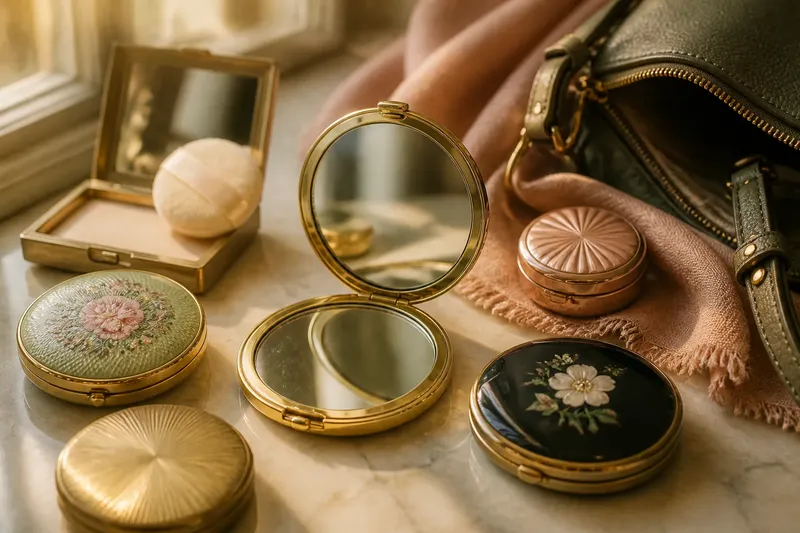
Where can you check lipstick when the dressing table is out of reach? A compact mirror puts a reflective surface in a small case that can be carried in a handbag or pocket. Some models hold only a mirror; others also contain pressed makeup and an applicator.
That difference matters when choosing one. A mirror for a brief check has a different job from a case that must also contain powder without leaving residue among the other things in a bag.
Match the compact mirror to the routine
The word “compact” can describe a small folding or lidded mirror, a case for pressed makeup, or an object that does both. The shape alone does not tell you what it is designed to hold.
Start by deciding what you want to carry: a mirror, a cosmetic product, or both. A lipstick check may call for a simple folding mirror. Carrying pressed powder adds questions about the pan, applicator and how the case closes around them.
For instance, imagine someone who carries pressed powder in its original cardboard packaging and a separate folding mirror. They move both into a case designed for that powder pan, check that the lid closes without catching the applicator, then place the case in a bag. The resulting trade-off is straightforward: fewer separate items to find, but the case takes up space and needs cleaning around its pan.
Read the case through its parts
Portability depends on the way a case opens and closes as much as on its size. A clasp that is hard to operate can make a quick check fiddly; a lid that will not stay at a useful angle may need to be held while you look. Hinges, mirror placement and compartments all affect handling.
Materials influence the feel and upkeep. Metal may provide a firm case and a surface suited to engraving, while moulded plastic can be light. Leather or fabric coverings alter the grip and may soften knocks. None is automatically the better choice: a polished finish can show fingerprints, while a textured one may feel steadier in the hand.
Enamel, patterned covers and distinctive clasps can make a compact a small display object as well as a tool. Decoration gives the case a visible character; it does not tell you whether the mirror is clear or the closure works properly.
Use a compact in a borrowed moment
A compact mirror can be opened in a washroom, at a station or during a pause between errands. These are possible settings, not a fixed history of how everyone used the object. What changes is that a person can carry a mirror rather than rely on one being available where they stop.
A compact may support inspection more often than full application: checking whether lipstick has smudged or powder has settled. It does not provide the even light or steady surface of a dressing table, and a shared mirror may leave little room for a prolonged routine.
Think of it as a pocket notebook. It carries a small part of a larger practice without replacing the desk where that practice might otherwise happen. A compact likewise makes a limited part of grooming portable; it does not turn every available surface into a dressing table.
Check these details before choosing a compact mirror
- Reflection: Look across the mirror for visible distortion. If the image appears warped, choose another model; if it looks clear, check that it suits the task.
- Viewing area: Compare the mirror with the area you need to see. If it is too small for a face check, choose a larger mirror; if you only need a lipstick check, a smaller one may be adequate.
- Hinge and lid: Open the case and see whether the lid stays at a useful angle. If it swings shut or feels loose, choose a steadier hinge; if it stays open, consider whether you can hold it comfortably.
- Clasp: Open and close the case. If the clasp catches or will not close, reject it for bag use; if it closes cleanly, check that the case does not pop open with light handling.
- Contents: Check whether the case is for a mirror alone or a specific powder pan and applicator. If your items do not fit securely, choose a compatible case; if they fit without shifting, check the lid still closes.
- Cleaning access: Look at the corners around the mirror and any pan. If residue would be difficult to reach, choose a simpler layout; if the surfaces are accessible, keep a soft cloth for the mirror and follow the maker’s care instructions.
- Refill fit: If the case holds makeup, check the maker’s guidance for the intended pan. If the refill is not listed as compatible, choose a case made for it; if it is listed, confirm that the pan sits securely before carrying it.
These checks are about practical fit, not a claim that one design suits everyone. A decorative case can still be useful, but it should meet the needs of the contents and the setting.
What do people ask about compact mirrors?
What is the difference between a compact mirror and a powder compact?
A compact mirror is a small mirror, often folding or enclosed in a case. A powder compact is designed to hold pressed powder and may also include a mirror and applicator, so one object can serve both purposes.
Why carry a compact mirror?
It lets you check your reflection without needing a mirror to be available at your destination. If you also carry makeup, a case designed for that product can keep the items together.
How should I clean a compact mirror?
Use a soft, clean cloth on the mirror and avoid letting moisture collect around hinges or product pans. Follow the maker’s care instructions for the case and keep the mirror cloth separate from applicators.
Can I apply makeup with a compact mirror?
Yes, if the reflection is clear and the lid stays at a useful angle. For detailed application, the available light and a steady surface may matter more than the case’s decoration.
Keep the case suited to the task
A compact mirror makes a limited part of grooming portable. Its case can protect the mirror, its hinge can direct the reflection, and its compartments can keep some products together. Those features are useful only insofar as they suit the task you want the object to perform.
Choose a compact mirror for the moment it needs to serve: a quick check, a lipstick touch-up or a contained set of makeup. Then consider how it will sit among your belongings and whether its contents can be kept clean and secure. A case that fits the routine is more useful than one that merely looks ready for a dressing table.