A Makeup Bag Reset for the Change of Season
A makeup bag reset for the change of season helps you keep what suits your routine, set aside what does not and avoid buying replacements by default.
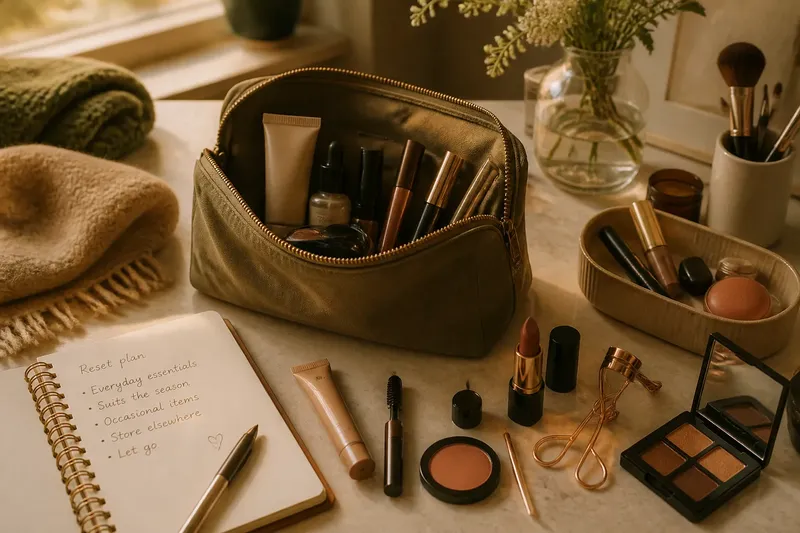
What should stay in your makeup bag when the season changes? A makeup bag reset for the change of season starts with what you actually use and what fits the days ahead, not with a shopping list. Put the bag on a clear surface, empty it, and look at each item as part of a routine rather than a collection of good intentions.
What belongs in a seasonal makeup bag reset?
Keep the reset focused on colour cosmetics and the habits around them. The season may change your clothes, commute, daylight or social plans; it does not automatically make every product you own unsuitable. A sheer lip colour that worked in warm weather might remain useful, while a heavier base may come out again when you prefer more coverage.
Before sorting, note what an ordinary week is likely to involve. Consider where you get ready, how much time you have, whether you expect to wear makeup at all, and what you tend to reach for when leaving the house. A routine based on rushed mornings needs different contents from one built around a leisurely evening.
- Everyday items you use without having to think about them.
- Products that suit the clothes, settings or occasions ahead.
- Occasional items you genuinely expect to use soon.
- Products that no longer fit your routine and can leave the bag.
Think of the bag as a coat pocket: it should hold the useful things for this part of the year, not every object you might conceivably need someday.
How do I decide what I will use in the coming season?
Start with recent behaviour, then check it against the routine you expect. If a product has been ignored through several ordinary weeks, ask whether the next season gives you a specific reason to reach for it. A change in weather alone is not a reason; a shift towards outdoor plans, for instance, may make a particular lip or cheek colour more appealing.
Make three groups: keep in the bag, store elsewhere, and let go. The bag group is for products that belong in the near-term routine. The storage group is for items you may use later but do not need at hand. Let-go items are those you do not want to use, cannot sensibly keep, or have stopped suiting your preferences.
Imagine you have a busy week ahead and usually wear tinted moisturiser, brow gel and a familiar lipstick, while a bright shadow palette has stayed untouched. Keep the first three together, place the palette in a separate drawer if you still want it for occasional evenings, and leave it out of the daily bag. The expected result is a bag that reflects the routine you described, without requiring a purchase.
Should I keep products I only use occasionally?
Yes, if there is a plausible occasion ahead and the product is still something you want to wear. Occasional use is not the same as uselessness. A dramatic eyeliner or a particular lipstick can stay in your wider collection without taking up space in the everyday bag.
Give occasional products a home outside the daily kit, such as a drawer or a small tray. This makes them easier to find when needed and stops them competing with the products you use routinely. If you cannot name a situation in which you would choose an item, it may be time to let it go rather than preserve it out of vague obligation.
What should I check before keeping a product?
Check whether the packaging is intact, the product looks and smells as you expect, and you still enjoy using it. These are practical prompts, not a substitute for the product label. If a product has changed noticeably, or you are unsure whether it remains suitable to use, set it aside and follow the manufacturer’s instructions; local disposal rules may also apply.
Then consider whether the item earns its place in this particular bag. A product can be perfectly fine and still be the wrong choice for your current routine. Keep the distinction clear: suitability for use is one question, usefulness to you now is another.
How can I reset the bag without buying replacements?
First, gather the items you already own that meet the routine you expect. Only then notice any genuine gap. A bag does not need a product in every category, and an empty slot is not a problem that requires solving.
Try arranging the keepers by the order you usually use them: complexion, brows, eyes and lips, for example. Put frequent items where they are easy to reach and move occasional ones elsewhere. If a product is useful but not suited to the bag, store it with the rest of your collection rather than buying a duplicate for convenience.
For a simple reset, use this sequence:
- Empty the bag and wipe its inside, following any care guidance for the material.
- Group products by how often you use them, not by brand or category.
- Choose the items that fit your likely routine and place them back in the bag.
- Store occasional items separately and remove products you no longer want.
- Leave the bag alone for a few ordinary days before deciding that it needs anything else.
How often should I review my makeup bag?
Review it when your routine changes enough to make the contents awkward: perhaps you have switched bags, altered where you get ready, or stopped wearing certain products. A seasonal change can be a useful prompt, but there is no need to perform a full reset on a calendar if everything still earns its place.
Between reviews, return products to the same few groups and remove items that have drifted in without a clear purpose. That small habit keeps the next makeup bag reset for the change of season from becoming an inventory of forgotten plans. The best measure of a tidy bag is simple: you can see what you use, find it readily, and leave the rest without feeling obliged to replace it.