Cream, Powder or Liquid Blush: Choosing a Finish and Format
Cream, powder or liquid blush: compare finish, handling and portability to choose a format that suits your application habits and the look you want.
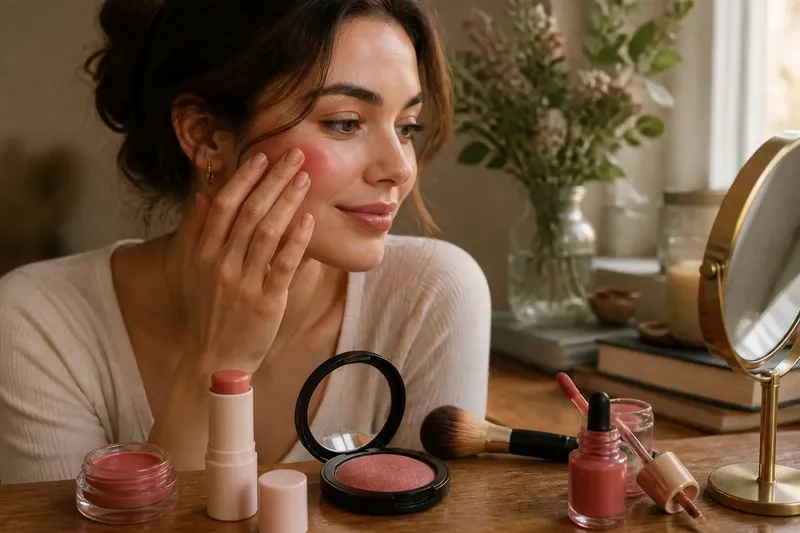
Should you choose cream, powder or liquid blush? The best blush format depends less on a rule about skin type than on the finish you want, the tools you already use and where you expect to apply it. Cream tends to look pliable and softly melded; powder offers a more controlled, often diffused surface; liquid can give a fresh stain or a concentrated flush, depending on its formula and how quickly you blend.
Those descriptions are starting points, not promises. A sheer powder can look barely there, while a dense cream can read as glossy or opaque. Shade, formula, skin preparation and application all shift the result. Think of the three formats as different brushes for a small task: none is universally best, but each has a particular way of behaving.
Choose cream blush for a flexible, skin-close finish
Cream blush is a sensible choice if you like to apply colour with fingers, want to work in small increments or prefer a finish that looks less powdery. It may leave a satin sheen, a balm-like glow or a more natural-looking flush. The word “cream” alone does not tell you how shiny or rich it will be, so check the product description and look for a blended swatch where available.
For a light result, pick up a little with a clean fingertip or a compact synthetic brush and tap it onto the cheek. Press and blend at the edges rather than rubbing briskly across the skin. If you use foundation, a cream product is often easiest to place before setting powder; dragging it over a powdered base can disturb what is underneath. That is a useful default, not a law of cosmetics.
Cream formats suit a routine built around quick, direct application. A pot or stick may be convenient to handle, but the surface can collect residue from fingers or a brush. Keep the lid closed between uses, and use clean hands or a washable tool. A stick is easy to swipe, though its shape may make precise placement awkward on a small area.
Choose cream if you value adjustability and a soft, movable finish more than a completely dry feel. If you dislike tackiness, your hair tends to catch on face products, or you want blush that layers neatly over a powdered complexion, a powder may feel more comfortable.
Choose powder blush for a dry, buildable application
Powder blush is often the most straightforward option for anyone already using a brush and setting powder. It can create a matte, satin or finely luminous finish, and a soft brush makes it possible to distribute colour gradually. The format also gives a clear sense of how much product the brush has picked up, though highly pigmented powders still call for a light touch.
Tap excess product from the brush before it reaches your cheek, then use small, light strokes or presses. A fluffy brush usually diffuses colour across a broader area; a smaller, denser brush places it more precisely. Build in thin layers instead of trying to correct a strong patch after the fact. A powder that looks vivid in its pan may soften once spread over the skin.
Powder is a practical fit if you want a less dewy finish, prefer not to use fingers, or plan to apply blush over a set base. It can also make sense in a routine where other products are already powder-based. On dry or textured areas, however, a matte formula may draw attention to surface detail. A more finely milled or satin option may be preferable, though the actual finish varies by product.
Portability depends on the packaging as much as the powder itself. A pressed compact is tidy to carry, but a dropped compact can crack, and loose powder is more liable to spill. If you want to touch up away from home, consider whether the case closes securely and whether you are comfortable carrying the brush it needs.
Choose liquid blush for a fresh stain or concentrated colour
Liquid blush covers a broad range of textures, from thin tints to opaque, creamy liquids. A sheer tint may leave a fresh, stained effect; a richer formula may give a vivid, more deliberate flush. The main handling difference is that liquids can spread quickly, and some begin to set before you have finished blending. For that reason, it helps to place a small amount first and work one cheek at a time.
Use the applicator only to place product, rather than drawing a large stripe across the cheek. Blend with a fingertip, sponge or brush, depending on the formula and the finish you prefer. A damp sponge can soften colour; a brush may leave more intensity. If the liquid has a dropper or doe-foot applicator, avoid touching it directly to the face when you want to keep the container clean.
Liquid can suit someone who wants a lightweight-looking stain, enjoys blending with a sponge, or prefers a product that does not sit visibly as powder on the surface. Its finish is not automatically dewy, and a tint is not automatically sheer. Check the product description and look for a swatch shown after blending, rather than judging only by the colour in the container.
For carrying, a tightly closed tube or bottle can be convenient, but a runny formula may be messier if its cap loosens. A liquid blush also asks for a little more attention during application than a pressed powder, particularly if it dries quickly. If you want to apply makeup in a hurry without a mirror, a slower-blending cream may be easier to manage.
Match the format to your routine and preferred tools
Start with the action you want to repeat, not the label on your skin. If you like to tap makeup on with fingers and blend as you go, cream is an intuitive place to start. If you keep a blush brush beside your powder and prefer a dry finish, powder fits that habit. If you like using a sponge and want colour that can be blended into a stain, liquid may be the better match.
Imagine you are getting ready at a desk with a small brush and a powdered foundation. A pressed powder blush is likely to be the easiest option because it uses the tool already in your hand and sits naturally in that sequence. If the same person switches to a dewy base and likes tapping on makeup with fingertips, a cream may feel more compatible. The choice changes with the routine, not with a universal ranking of formats.
- You want a soft, flexible glow: Begin with cream. If the blended swatch looks satin or balm-like, choose it for that finish; if it remains tacky, consider powder instead.
- You want brush-led control over a set base: Try powder with a brush suited to the area. If it catches on dry patches, switch to a satin formula or try cream before setting powder.
- You want a blended stain: Consider liquid and work one cheek at a time. If the colour sets before you can soften it, choose a slower-blending cream instead.
- You want a simple touch-up: Check whether the packaging closes securely and whether you can carry the needed tool. If a loose powder or bottle seems awkward, choose a pressed compact with a secure case.
- You dislike residue on your fingers: Use a powder brush or blend liquid with a sponge. If neither tool suits your routine, choose a cream stick that can be applied without dipping fingers into a pot.
- You are unsure how strong the colour will look: Check a swatch after blending, not only the shade in the pan or container. If the blended swatch still looks too vivid, choose a sheerer formula or a more muted shade.
What should you consider before choosing a blush format?
Can you use cream blush over foundation?
Yes, but apply it gently and watch how the base responds. Tapping a small amount over an unpowdered or lightly set foundation is often less disruptive than rubbing it across a heavily powdered surface.
Is powder blush only for oily skin?
No. Powder is a format, not a skin-type prescription. If you prefer a dry finish or use a brush, powder may suit you; if your skin feels dry, a less matte formula can look more comfortable.
Does liquid blush always look dewy?
No. Some liquids dry down to a more natural or matte-looking finish, while others remain luminous. Check the stated finish and how the colour looks once blended, since the liquid in its packaging can be misleading.
Which blush format is easiest for a beginner?
That depends on the tool you find easiest to control. A sheer powder can be forgiving when applied with a fluffy brush, while a cream can be easy to tap on in small amounts; a fast-setting liquid may require quicker blending.
Check how a blush handles on your usual base
A swatch can show colour and texture, but it does not tell you how easily a formula blends across your usual base. If you can sample a product, use a small amount and observe whether it moves smoothly, catches on dry patches or becomes difficult to soften. If it blends evenly, the format may suit your routine; if it lifts the base or sets too quickly, try a different tool or formula before ruling out the whole format. Follow the label and manufacturer’s instructions where they apply, particularly for application and storage.
Say you usually wear a lightly powdered foundation, have a fluffy brush to hand and want a muted cheek colour. You pick up a small amount of powder blush, tap off the excess, and press it lightly onto one cheek. If the colour builds gradually without disturbing the base, powder fits those inputs; if it catches on a dry patch, the observable result points towards a satin formula or cream applied before powder instead.
For cream, powder or liquid blush, the useful question is whether you want to blend with fingers, brush or sponge, and what surface you want to see afterwards. Pick the format that makes that action comfortable, then adjust the amount and tool before deciding the product itself is wrong. A small change in technique can do more than buying another container with a different texture.